



ALTIS believe it is important for coaches to develop a “real-time” eye. To help with this, they created a method of analysis called the ALTIS Kinogram Method, based on still images derived from video. This article teaches coaches the Kinogram Method for sprint analysis, and explains how to adapt the method to individual athletes and…

One of the most frequent questions we hear from visiting coaches at ALTIS is “How did you develop your ‘coaching eye’?”
The answer is really quite simple: We have watched a lot of athletes do stuff, and we paid very close attention while doing so! In the days when iPhones, inexpensive high-speed cameras, biomechanical analysis apps, and wearables did not exist, watching closely was our only option to better understand what was going on.
Now that these technologies are available to us, it is imperative that we don’t forget about the importance of developing our “real-time” eye. If we do this correctly, technology can support us through the process, giving today’s coaches a leg up on those of us who had to do it the “old-fashioned” way.
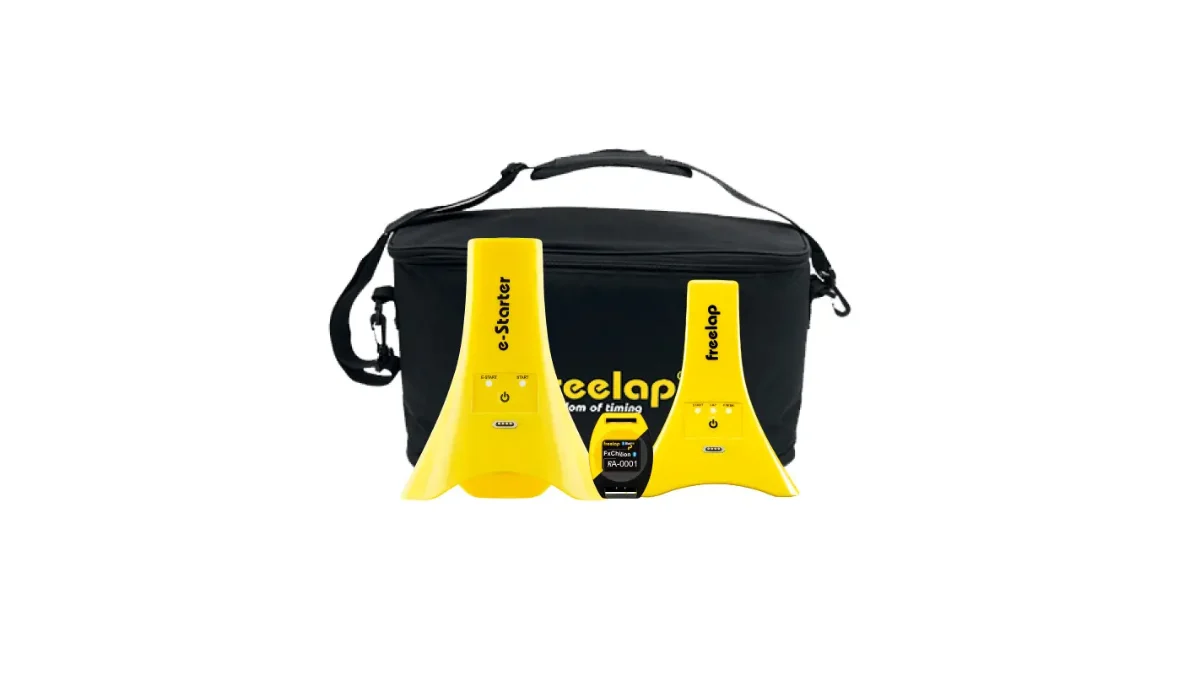
We suggest a strategic implementation of technology. For example, combine repetitions using Freelap with ones that do not, try to estimate the repetition time before checking the app, watch video after sessions and limit it during them, etc.
It is with this objective in mind that we offer the following method of analysis that we use at ALTIS in support of our daily coaching. It is called the ALTIS Kinogram Method, and it is based on an analysis system that is more than a century old.
This article makes up one single section of the Sprint Module within the new 12-module ALTIS Essentials Course, which we have designed to be the initial step into all coach education pathways. It provides a concise introduction to core topics that underpin successful coaching in all sports. We crafted this exciting new addition to the ALTIS Education Platform for individuals seeking to gain a succinct overview of essential coaching theory and its application, in a condensed short-course format. We are extremely proud of the work that has gone into this course, and if you haven’t already taken the foundation course, we encourage you to check it out!
First, before delving into the details of the analysis method, we need to have a common understanding of the definition of “sprinting.” Any discussion pertaining to “sprinting” is truly referring to running at maximal or near-maximal speeds. The overarching aim of sprinting is for the performer to propel their body down the track, pitch, field, or court as fast as possible.
If we consider this task simply, the athlete who can most appropriately project their body forward in the shortest time frame, and maintain top-speed the longest, will be the most successful. This type of motion has specific kinematic characteristics differentiating its gait from walking, jogging, or sub-maximal running. Understanding what the gait cycle looks like is therefore a key tool in being able to error-detect and correct.
Gait
The gait cycle is the basic unit of measurement in gait analysis. It begins when one foot comes into contact with the ground and ends when the same foot contacts the ground again.
Key landmarks in the gait cycle include:
Humans transition from a walking gait to a running gait at a certain speed threshold—generally 2.0–2.7m/s (Schache et al., 2014). The demarcation between walking and running occurs when periods of double support during the stance phase of the gait cycle (both feet simultaneously in contact with the ground) give way to two periods of double float at the beginning and end of the swing phase of gait (neither foot touching the ground).
In running, there are no periods when both feet are in contact with the ground. As the athlete’s speed increases, less time is spent in stance. Jogging is normally seen at speeds of approximately 3.2–4.2 m/s; running at around 3.5 to 6.0 m/s; and sprinting anywhere upwards from there, depending on the individual.
Sprinting Gait
When approaching maximal speed, we see subtle gait differences to that noted in sub-maximal running. As running speed increases, time spent in swing increases, stance time decreases, double float (flight time) increases, and cycle time shortens. Generally, as speed increases, the initial contact changes from being relatively rearfoot to relatively forefoot. This is important to understand, as it relates to footwear, cognitive control of ground strike, and questions in regard to dorsiflexion and plantar flexion. We will discuss this further a little later in this article.
Eadweard J. Muybridge, in the 1880s, was the first to examine sprint kinematics, and display it in pictorial form. He used cinematographic and dynamographic techniques to explore vertical reactions during various gaits (Vazel, 2014).

“Chronophotography” soon replaced “cinematography.” A “kinogram” is a set of still pictures derived from a video source. First found in 1880s French physiology textbooks, it was also used to describe movement in USSR biomechanics publications in the early 1930s. Kinogram is often used as a synonym for chronophotography, but is differentiated through the optional choice of frame usage. With chronophotography, the time interval between still frames remains constant; with kinograms, we can select the frames as we feel are most appropriate (Vazel, 2018).
ALTIS coaches use five frames—three stance phase frames and two flight phase frames—which form the ALTIS Kinogram Method. The three stance phase frames are termed “touch-down,” “full-support,” and “toe-off.” The two flight phases are termed “MVP” (maximal vertical projection) and “strike,” which is the initial point at which the swing-leg hamstring is under maximal stretch.

With the overarching understanding that each athlete has their own individual mechanical solution to a movement puzzle, we will nevertheless offer our thoughts on what we feel are appropriate positions for each of these frames. It is up to individual coaches to determine what is appropriate for their own athlete group, and whether there should be any discrepancy from what we recommend.
Understand that we feel these are the most relevant positions for a sprint population. They are not necessarily the positions we would seek from a team sport athlete within the confines of playing their sport. Having said that, it is imperative that the coach and athlete understand the rules before breaking them. Understanding the most efficient acceleration and upright mechanics will form a starting point from which coaches and athletes can adjust appropriately to their own sport, event, or position.
First, we offer the reasons why we feel a kinogram method is a viable means to observe movement:
At first, this may seem like a big undertaking, but with practice, our coaches are able to film, capture, and produce the kinogram final product in less than five minutes. It may be challenging if a coach has a group of 30 athletes, but it is important to understand that every repetition of every athlete in every session is not necessary. We attempt to build one kinogram for each athlete per week, normally during a similar training session.
Our Protocol
Following, we will offer the frame positions, key anatomical landmarks, and our expectations of athlete shapes within these positions. In addition, we have attempted to identify and comment on a few of the more frequent questions we are asked, as well as offer our thoughts on some of the sport’s more controversial subjects.
We will detail the following five frames in order:
We do not profess that these kinograms display “perfect” form. Rather, we chose them because of the relative similarities of the training session and the similar abilities of the athletes, as well as some of the unique differences that are evident. We encourage coaches to form their own conclusions as to where these athletes fit into their own understanding of mechanical efficiency.
Toe-off is the last frame at which the rear leg (stance leg) foot is in contact with the ground.

Discussion Point: ‘Triple Extension’
Triple extension refers to the simultaneous extension of the ankle, knee, and hip joints. Coaches should understand, however, that complete and full triple extension rarely occurs in sprinting. On toe-off, we do not see complete extension at the knee, as the thigh moves immediately forward after this point. Furthermore, the activity of extensor muscle groups deteriorates before complete triple extension can support increased force production to contribute to speed production. Requesting triple extension from an athlete is an excellent way to promote increased ground-contact times, anteversion of the pelvis, a relatively larger back-side sprint cycle, ultimately slower velocities, and higher incidence of injury.
MVP is the point at which there is maximal vertical displacement of the center of mass, as determined by the lowest point of both feet parallel to the ground.

Discussion Point: Is Recovery of the Free Leg at Toe-Off Active or Passive?
Some coaches suggest that the recovery of the swing leg from back-side to front-side is a passive by-product of the forces generated at toe-off, while others propose the athlete should actively attempt to bring the leg into a position of hip flexion. It is important to understand that the recovery mechanism of the swing leg should be a very free, very fluid function. If the athlete strikes the ground appropriately, with the appropriate negative foot speed, the appropriate angle of force application, and the appropriate force, the heel will come to the buttock with the femur at zero and that transference will generally be sufficient to lift the knee.
At toe-off, the recovery mechanism of the swing leg should be a very free, very fluid function. Share on XFor example, many kids do skipping activities. They can skip all day long and their hip flexors don’t get tired, but if they do a high knee drill in which they have to think about using the hip flexors, they burn out quickly.
If the hip flexors “test weak,” it is generally due to musculoskeletal “dysfunction,” faulty enervation, neural entrapment, or antagonist inhibition, rather than what has often been described as “weakness.” Coaches are encouraged to understand this prior to prescribing any specific hip flexor strengthening protocols.
Strike is the point at which the rear-leg knee is directly vertical to the pelvis, and the femur is perpendicular to the ground. This point should correspond approximately to the first point of maximal extension at the front-leg knee joint.

Discussion Point: Lower-Leg Swing and ‘Clawing’
If we simply observe the sprinting action without an understanding of the holistic nature of the way the body moves—through reflexes, co-contractions, fascial slings, etc.—we may assume that the lower-leg swing, and the concomitant pull-back towards the ground, is a volitional extension of the lower leg in front of the knee, and an active clawing of the foot towards the ground. In fact, there are many coaches who still use “pulling,” “clawing,” and “pawing” as primary sprinting cues. This is highly problematic.
It is important to understand that the out-swing of the lower leg (extension at the knee joint) is a result of the reversal of the contraction of the upper thigh (hip flexion to hip extension). Once the thigh blocks at approximately 90 degrees and starts to move backwards, the lower leg extends while the hip continues to open. The leg then comes back hard under the hip through a scissoring action, which reverses the pendulum and the cycle repeats itself. To repeat: The “casting out” of the lower leg is not a volitional action; it is simply a result of a strong reflexive action of the posterior chain extending the thigh back towards the COM.
Touch-down is the point at which the front foot first contacts the ground.

As an interesting aside, while coaches have for years thought that “knees together” is an appropriate position at touch-down, this actually rarely occurs in competition. It is theorized that perhaps the increased arousal levels of the competitive arena lead to athletes over-pushing horizontally, and impede their ability to recover the swing leg in time for “knees together” at touch-down. An example of this occurred in the most recent IAAF World Championships in London 2017, when of all 16 of the 100m finalists in the women’s and men’s competitions, only one (Kelly-Ann Baptiste of Trinidad and Tobago) achieved this position at maximum velocity. All others either did not achieve this position at all, or were only able to achieve it with one leg (for example, Usain Bolt, Reece Prescod, and Yohan Blake).
Discussion Point: Elbow Angles, Undulation, and Oscillation
It is important that all coaches understand that sprinting is a rotational-torsional activity. At toe-off (point of maximum extension at the hip), we will observe slight oscillation at the hip axis. To counteract this, we will observe similar oscillation at the shoulder axis through mid-thoracic counter-rotation. Similarly, if we watch from front or behind, we will observe counter-undulations at the hip and shoulder axes.
It is important that coaches do not try to limit these rotations in an effort to force the athlete into some sort of linear “perfection.” Our spine rotates for a reason; it is our job to make the most appropriate use of this, not to limit it unnaturally. From the side view, we should see a smooth wave-like motion of the hip, as it drops to its lowest point through late-stance full-support and rises maximally through MVP.
Understanding joints and muscle timing systems is critical to leveraging speed. Share on XUnderstanding joints and muscle timing systems is critical to leveraging speed. The human body is a hydraulic system where we have fluid in our joints. Hydraulics have a huge impact on our muscle and connective tissue systems to allow us to move greater forces.
The arms play a very important role in sprinting, and react to imbalance—so flail or compensation is always the result of something causing imbalance. If an arm is coming across the body, look at the opposite leg; arms counterbalance and help establish balance. The arms angulate from the shoulders, whereby the humerus acts like a pendulum; therefore, tension in the shoulders should be avoided as it impacts the oscillation of this pendular action.
The elbow joint should angulate through the swing commensurate with the knee joint. Rigid arm angles mean rotation shifts towards lumbar joints, which are better designed for flexion and extension than rotation. Many low back problems can be sourced to the relationship between the hip and shoulder axes undulating and oscillating with one another. We cannot stress enough the importance of allowing the elbow joint to open as the hands pass by the hip at touch-down. The arms will naturally close in front of and behind the body, so we will not need to cue this with most athletes.

Full-support is the point at which the stance-leg foot is directly under the pelvis, as indicated by the great toe approximately vertical to the front of the pelvis, and the heel approximately vertical to the rear of the pelvis.

Discussion Point: Dorsiflexion
How the foot contacts the floor is also critical. One of the greatest myths in sprinting at the high school level is that athletes should “get up on their toes” at high speed, or “run on their toes.” This is simply not what happens, and is a teaching concept that coaches should never utilize.
It is a high school level sprinting myth that athletes should ‘get up on their toes’ at high speed. Share on XWhile it is important that athletes understand the importance of a stable foot and ankle, we will always plantar flex prior to touch-down. Plantar flexion just prior to ground contact is a reflexive action that intensifies as velocity increases, so we will never observe a dorsiflexed touch-down during a maximum intensity sprint. Having said that, for athletes who over-plantar flex, and contact the ground too far in front of the COM, cueing dorsiflexion earlier in the sprint cycle can have a positive effect, though rarely is it the sole culprit.
Understand that what we do while on the ground will determine, for the most part, what happens while we are in the air. If the athlete over-pushes out of the back side, it will set up a relatively more horizontal parabola, excessive plantar flexion on the front side, and early touch-down. If you see a big rear-side “butt kick” and no knee lift, it generally means the athlete doesn’t understand pathways and ground contact time. Excessive plantar flexion during the back-side cycle, and spending too much time on the ground behind the COM, causes this.
Many question as to whether dorsiflexion needs to be taught in the running cycle. Athletes who experience negative interference from previous activities will suffer if they strike the ground excessively plantar-flexed, or complete the running cycle in a plantar-flexed position. In this case, the foot will collapse upon touch-down at a radical rate, and amortization rates during the early-stance phase will be significantly faster than if the ankle and the foot are stiffer.
When we observe elite sprinters, we tend to see relatively closed angles at the ankle joint inches away from ground contact prior to the reflexive opening. So, for athletes who have negative transference from other sports (gymnasts, for example), cueing dorsiflexion may be critical: it reduces injury, shortens lever systems, and promotes healthy joint hydraulics, and timing.
Exercises designed to strengthen the front of the shins are not appropriate at any time. Share on XUnderstand also that the inability to dorsiflex is rarely due to a lack of strength of the plantar flexors; thus, exercises designed to strengthen the front of the shins are not appropriate at any time, and will generally lead to more problems than they solve. Instead, coaches are advised to measure the passive range of motion at the ankle joint, and ensure that the athlete even has the ability to dorsiflex in the first place. If the passive ROM is not sufficient, then this needs to be addressed before any dorsiflexion cue can take effect.

Discussion Point: Posture
This term refers to both the static and functional relationships between body parts, and the body as a whole. The concept includes over 200 bones and some 600 muscles, not to mention the endless chains of fascia and various connective tissue systems. Efficient body mechanics is a function of balance and poise of the body in all positions possible—including standing, lying, sitting, during movements, and in a variety of mediums. These systems are monitored, driven, and controlled by a complex network of proprioceptors and their related members.
These functions can be further evaluated by observing excessive stress on joints, connective tissue, muscles, and coordinative action. In the sport of track and field, “active alerted posture” is the goal of all sportsmen. This can be defined by the balanced action of muscle groups on both sides of body joints at six levels:
People often try to design training schemes for posture of the spinal column, head, and pelvis in static routines in which they’re stationary. We see athletes doing incredible balance work in a pretty stationary motif and they look world-class, but when they run down the track, these different postural landmarks just don’t hold up. Posture at speed is very dynamic and involves complex communication between the body’s systems that is difficult to replicate in the weight room.
Once we understand the expectations of each of the positions, as well as how and/or when these positions can be compromised, we can begin to identify ways in which kinograms can be used over and above simple single-run analysis. As previously discussed in the justifications section, there are a multitude of different ways we can use the kinograms. While each coach should use methods that are most appropriate for the time, circumstance, and athlete population they work with, we will provide a few examples here of how we have used them in our own practice.
Asymmetries

Left-right asymmetries are easily identified in the above kinogram. We see in the upper frames that the swing-leg foot is significantly further behind the swing-leg knee at toe-off, for example. This gives us a starting place to attempt to identify why this is so.
Discussion Point: Symmetry
The body craves symmetry. If we observe asymmetry, it is almost always due to a musculoskeletal issue—rather than a technical “mistake” on the part of the athlete. If we identify an asymmetry, it is prudent for the coach to attempt to understand why it is evident, rather than try to cue the athlete out of it. If we identify, for example, that one side of the body has a tight hip flexor relative to the other side of the body (which is evident in the above kinogram), then we can prescribe additional stretching or a therapeutic intervention. This is a far more appropriate reaction to an asymmetry than asking the athlete to focus on one side over the other, which will generally just add fuel to the fire.
Athletes are great compensators—the superior ones compensate better than the less superior—so it is often very difficult to identify the driver of any musculoskeletal discrepancy. This is a challenge that we can only address through consistently and attentively analyzing movement.
The key to keeping athletes healthy is understanding the reasons their movements may be abnormal. Share on XWatch your athlete-group closely. Watch as many videos as you can get your hands on. Build out your kinograms, and share with others. Eventually, we will all become better at not only analyzing movement, but understanding the reasons why movement may be abnormal. This is truly the key to keeping athletes healthy!
Progression over Time

On the bottom kinogram above, we can see that the athlete is over-pushing out the back—spending a little too long on the ground behind the COM.
The athlete was asked to work on pushing more vertically—bouncing down the track, rather than pushing horizontally—and in warm-up wicket runs to slightly over-exaggerate this feeling. Thus, we see the upper kinogram, where the athlete has pushed overly vertical, and ends up with the free-leg foot significantly in front of the free-leg knee at toe-off. This position has, however, set up a greater hamstring stretch at “strike,” an increased rotational velocity, and a more appropriate touch-down relative to the bottom kinogram.
Intra-Group Comparisons

The above kinogram shows the similarities between two elite sprinters (PRs of 9.91 and 9.94). There are far more similarities between all these frames than there are differences, which highlights not only common positions and solutions, but also a common technical model.
Discussion Point: ‘Modeling’ Technique
Over time, all athletes will develop their own individual, idiosyncratic movement solutions. Generally, however, the closer an individual solution is to the most-efficient mechanical model, the better the athlete will be. The best athletes in any sport will almost always have a solid grounding in fundamental techniques.
It is important to understand, though, that individual differences do exist. One of a coach’s jobs is to determine if this difference is significant enough that we should step in and attempt to make a technical tweak, to close the gap to the more “appropriate” model. There is no doubt that this is a multi-layered, complex decision to make.
Following are a few heuristics to help us decide:
“Mechanics are the heart of every legit/complete S&C program. Fitness, strength, power, etc. are all SIDE effects.” –Dr. Kelly Starrett
Task Variance
The kinogram below compares an athlete executing two different sprinting tasks.

The upper kinogram shows the athlete sprinting off the end of a 220-centimeter wicket lane, while the lower kinogram shows two consecutive steps at the beginning of the straight-away at the end of a 60-meter end-bend run. (The first step begins 10 meters off the end of the bend.)
The purpose of this comparison is to see how stable the model is by comparing the potentiating, more controlled task to a more race-specific task.

It’s sometimes fun to go back in time, and see how athletes from previous generations sprinted. Above, we see the five-frame kinogram for Carmelita Jeter. We have drawn lines over it to more easily depict and measure the angles, if we wanted to analyze it further.


Donovan Bailey

1996 Olympic Champion Donovan Bailey seemed to “gallop” down the track, especially when he was at maximum velocity. In the kinogram above, you can clearly identify significant asymmetries. In fact, Bailey had a significant anthropometric abnormality, so expecting symmetry would have been a fool’s errand.
Marie-José Pérec

As discussed previously, French sprinter Pérec had an extremely unique stride: long, and relatively back-side dominant. Nevertheless, she enjoyed great success. Above, we also see the difference between Pérec’s stride in the 100m (upper kinogram) and the 200m (lower kinogram).
Jesse Owens

Notice the short arm carriage of Owens, and relatively choppy stride. Michael Johnson adopted this a few generations later.
An optional kinogram series for those with less time can be based on the only two attractors during the gait cycle: touch-down and toe-off. All other positions may be predicted from these two frames.

Dr. Nick Winkelman, motor learning expert and Head of Athletic Performance & Science for Irish Rugby, offers an interesting alternative that relates to the relative angle of projection:
The question of appropriate selection of frames as it relates to prioritization and simplicity, “is to identify the lowest number of technical landmarks that, if changed, have the largest impact on the entire technique; therefore: 1) toe-off, and 2) full-support. Interestingly, toe-off precedes the primary horizontal change in force-motion (i.e., back to front) and full-support precedes the primary vertical change in force-motion (i.e., down to up). I feel that these force-motion shifts (i.e., eccentric to concentric) carry the variability that echoes through the coordination that connects these space-time points. Thus, good coaching can be directed at these time points, with physical development working on the neuromuscular factors that need to deliver the coordinative message.”
Below is what the kinogram would look like if we followed Dr. Winkelman’s recommendation. It is certainly something to consider.

Additionally,a two-frame kinogram may be a better way to capture acceleration mechanics.
Coaches with less time can base an optional kinogram series on the touch-down and toe-off. Share on XWe use this method to capture projection and rise elements of the acceleration, compare them across time, and even compare them across varying external loads, as shown below.

This kinogram shows a sprinter accelerating out of the blocks with the equivalent of 40%, 20%, and 3% of additional body-weight in resistance—using the 1080 Sprint machine. This kinogram was an effective and efficient way for us to track any mechanical changes with the additional external load.
We hope you have found this article valuable. Whether you coach football players, softball players, or sprinters, we also hope you will enjoy the kinogram process, and the insight this can give you into the mechanics of the athletes you coach. Please share these kinograms online, through your social media channel of choice (tag @ALTIS), as well as on the ALTIS Agora Facebook page. We look forward to continued discussions around efficient sprint technique, and the impact effective mechanics can have both on performance and health.
Be sure to check out the new ALTIS Essentials Course!
The authors would like to thank Drs. Nick Winkelman, JB Morin, and Ken Clark for their input, and especially PJ Vazel for the wealth of information he continues to provide.

ALTIS believe it is important for coaches to develop a “real-time” eye. To help with this, they created a method of analysis called the ALTIS Kinogram Method, based on still images derived from video. This article teaches coaches the Kinogram Method for sprint analysis, and explains how to adapt the method to individual athletes and…
One of the most frequent questions we hear from visiting coaches at ALTIS is “How did you develop your ‘coaching eye’?”
The answer is really quite simple: We have watched a lot of athletes do stuff, and we paid very close attention while doing so! In the days when iPhones, inexpensive high-speed cameras, biomechanical analysis apps, and wearables did not exist, watching closely was our only option to better understand what was going on.
Now that these technologies are available to us, it is imperative that we don’t forget about the importance of developing our “real-time” eye. If we do this correctly, technology can support us through the process, giving today’s coaches a leg up on those of us who had to do it the “old-fashioned” way.
We suggest a strategic implementation of technology. For example, combine repetitions using Freelap with ones that do not, try to estimate the repetition time before checking the app, watch video after sessions and limit it during them, etc.
It is with this objective in mind that we offer the following method of analysis that we use at ALTIS in support of our daily coaching. It is called the ALTIS Kinogram Method, and it is based on an analysis system that is more than a century old.
This article makes up one single section of the Sprint Module within the new 12-module ALTIS Essentials Course, which we have designed to be the initial step into all coach education pathways. It provides a concise introduction to core topics that underpin successful coaching in all sports. We crafted this exciting new addition to the ALTIS Education Platform for individuals seeking to gain a succinct overview of essential coaching theory and its application, in a condensed short-course format. We are extremely proud of the work that has gone into this course, and if you haven’t already taken the foundation course, we encourage you to check it out!
First, before delving into the details of the analysis method, we need to have a common understanding of the definition of “sprinting.” Any discussion pertaining to “sprinting” is truly referring to running at maximal or near-maximal speeds. The overarching aim of sprinting is for the performer to propel their body down the track, pitch, field, or court as fast as possible.
If we consider this task simply, the athlete who can most appropriately project their body forward in the shortest time frame, and maintain top-speed the longest, will be the most successful. This type of motion has specific kinematic characteristics differentiating its gait from walking, jogging, or sub-maximal running. Understanding what the gait cycle looks like is therefore a key tool in being able to error-detect and correct.
Gait
The gait cycle is the basic unit of measurement in gait analysis. It begins when one foot comes into contact with the ground and ends when the same foot contacts the ground again.
Key landmarks in the gait cycle include:
Humans transition from a walking gait to a running gait at a certain speed threshold—generally 2.0–2.7m/s (Schache et al., 2014). The demarcation between walking and running occurs when periods of double support during the stance phase of the gait cycle (both feet simultaneously in contact with the ground) give way to two periods of double float at the beginning and end of the swing phase of gait (neither foot touching the ground).
In running, there are no periods when both feet are in contact with the ground. As the athlete’s speed increases, less time is spent in stance. Jogging is normally seen at speeds of approximately 3.2–4.2 m/s; running at around 3.5 to 6.0 m/s; and sprinting anywhere upwards from there, depending on the individual.
Sprinting Gait
When approaching maximal speed, we see subtle gait differences to that noted in sub-maximal running. As running speed increases, time spent in swing increases, stance time decreases, double float (flight time) increases, and cycle time shortens. Generally, as speed increases, the initial contact changes from being relatively rearfoot to relatively forefoot. This is important to understand, as it relates to footwear, cognitive control of ground strike, and questions in regard to dorsiflexion and plantar flexion. We will discuss this further a little later in this article.
Eadweard J. Muybridge, in the 1880s, was the first to examine sprint kinematics, and display it in pictorial form. He used cinematographic and dynamographic techniques to explore vertical reactions during various gaits (Vazel, 2014).
“Chronophotography” soon replaced “cinematography.” A “kinogram” is a set of still pictures derived from a video source. First found in 1880s French physiology textbooks, it was also used to describe movement in USSR biomechanics publications in the early 1930s. Kinogram is often used as a synonym for chronophotography, but is differentiated through the optional choice of frame usage. With chronophotography, the time interval between still frames remains constant; with kinograms, we can select the frames as we feel are most appropriate (Vazel, 2018).
ALTIS coaches use five frames—three stance phase frames and two flight phase frames—which form the ALTIS Kinogram Method. The three stance phase frames are termed “touch-down,” “full-support,” and “toe-off.” The two flight phases are termed “MVP” (maximal vertical projection) and “strike,” which is the initial point at which the swing-leg hamstring is under maximal stretch.
With the overarching understanding that each athlete has their own individual mechanical solution to a movement puzzle, we will nevertheless offer our thoughts on what we feel are appropriate positions for each of these frames. It is up to individual coaches to determine what is appropriate for their own athlete group, and whether there should be any discrepancy from what we recommend.
Understand that we feel these are the most relevant positions for a sprint population. They are not necessarily the positions we would seek from a team sport athlete within the confines of playing their sport. Having said that, it is imperative that the coach and athlete understand the rules before breaking them. Understanding the most efficient acceleration and upright mechanics will form a starting point from which coaches and athletes can adjust appropriately to their own sport, event, or position.
First, we offer the reasons why we feel a kinogram method is a viable means to observe movement:
At first, this may seem like a big undertaking, but with practice, our coaches are able to film, capture, and produce the kinogram final product in less than five minutes. It may be challenging if a coach has a group of 30 athletes, but it is important to understand that every repetition of every athlete in every session is not necessary. We attempt to build one kinogram for each athlete per week, normally during a similar training session.
Our Protocol
Following, we will offer the frame positions, key anatomical landmarks, and our expectations of athlete shapes within these positions. In addition, we have attempted to identify and comment on a few of the more frequent questions we are asked, as well as offer our thoughts on some of the sport’s more controversial subjects.
We will detail the following five frames in order:
We do not profess that these kinograms display “perfect” form. Rather, we chose them because of the relative similarities of the training session and the similar abilities of the athletes, as well as some of the unique differences that are evident. We encourage coaches to form their own conclusions as to where these athletes fit into their own understanding of mechanical efficiency.
Toe-off is the last frame at which the rear leg (stance leg) foot is in contact with the ground.
Discussion Point: ‘Triple Extension’
Triple extension refers to the simultaneous extension of the ankle, knee, and hip joints. Coaches should understand, however, that complete and full triple extension rarely occurs in sprinting. On toe-off, we do not see complete extension at the knee, as the thigh moves immediately forward after this point. Furthermore, the activity of extensor muscle groups deteriorates before complete triple extension can support increased force production to contribute to speed production. Requesting triple extension from an athlete is an excellent way to promote increased ground-contact times, anteversion of the pelvis, a relatively larger back-side sprint cycle, ultimately slower velocities, and higher incidence of injury.
MVP is the point at which there is maximal vertical displacement of the center of mass, as determined by the lowest point of both feet parallel to the ground.
Discussion Point: Is Recovery of the Free Leg at Toe-Off Active or Passive?
Some coaches suggest that the recovery of the swing leg from back-side to front-side is a passive by-product of the forces generated at toe-off, while others propose the athlete should actively attempt to bring the leg into a position of hip flexion. It is important to understand that the recovery mechanism of the swing leg should be a very free, very fluid function. If the athlete strikes the ground appropriately, with the appropriate negative foot speed, the appropriate angle of force application, and the appropriate force, the heel will come to the buttock with the femur at zero and that transference will generally be sufficient to lift the knee.
At toe-off, the recovery mechanism of the swing leg should be a very free, very fluid function. Share on XFor example, many kids do skipping activities. They can skip all day long and their hip flexors don’t get tired, but if they do a high knee drill in which they have to think about using the hip flexors, they burn out quickly.
If the hip flexors “test weak,” it is generally due to musculoskeletal “dysfunction,” faulty enervation, neural entrapment, or antagonist inhibition, rather than what has often been described as “weakness.” Coaches are encouraged to understand this prior to prescribing any specific hip flexor strengthening protocols.
Strike is the point at which the rear-leg knee is directly vertical to the pelvis, and the femur is perpendicular to the ground. This point should correspond approximately to the first point of maximal extension at the front-leg knee joint.
Discussion Point: Lower-Leg Swing and ‘Clawing’
If we simply observe the sprinting action without an understanding of the holistic nature of the way the body moves—through reflexes, co-contractions, fascial slings, etc.—we may assume that the lower-leg swing, and the concomitant pull-back towards the ground, is a volitional extension of the lower leg in front of the knee, and an active clawing of the foot towards the ground. In fact, there are many coaches who still use “pulling,” “clawing,” and “pawing” as primary sprinting cues. This is highly problematic.
It is important to understand that the out-swing of the lower leg (extension at the knee joint) is a result of the reversal of the contraction of the upper thigh (hip flexion to hip extension). Once the thigh blocks at approximately 90 degrees and starts to move backwards, the lower leg extends while the hip continues to open. The leg then comes back hard under the hip through a scissoring action, which reverses the pendulum and the cycle repeats itself. To repeat: The “casting out” of the lower leg is not a volitional action; it is simply a result of a strong reflexive action of the posterior chain extending the thigh back towards the COM.
Touch-down is the point at which the front foot first contacts the ground.
As an interesting aside, while coaches have for years thought that “knees together” is an appropriate position at touch-down, this actually rarely occurs in competition. It is theorized that perhaps the increased arousal levels of the competitive arena lead to athletes over-pushing horizontally, and impede their ability to recover the swing leg in time for “knees together” at touch-down. An example of this occurred in the most recent IAAF World Championships in London 2017, when of all 16 of the 100m finalists in the women’s and men’s competitions, only one (Kelly-Ann Baptiste of Trinidad and Tobago) achieved this position at maximum velocity. All others either did not achieve this position at all, or were only able to achieve it with one leg (for example, Usain Bolt, Reece Prescod, and Yohan Blake).
Discussion Point: Elbow Angles, Undulation, and Oscillation
It is important that all coaches understand that sprinting is a rotational-torsional activity. At toe-off (point of maximum extension at the hip), we will observe slight oscillation at the hip axis. To counteract this, we will observe similar oscillation at the shoulder axis through mid-thoracic counter-rotation. Similarly, if we watch from front or behind, we will observe counter-undulations at the hip and shoulder axes.
It is important that coaches do not try to limit these rotations in an effort to force the athlete into some sort of linear “perfection.” Our spine rotates for a reason; it is our job to make the most appropriate use of this, not to limit it unnaturally. From the side view, we should see a smooth wave-like motion of the hip, as it drops to its lowest point through late-stance full-support and rises maximally through MVP.
Understanding joints and muscle timing systems is critical to leveraging speed. Share on XUnderstanding joints and muscle timing systems is critical to leveraging speed. The human body is a hydraulic system where we have fluid in our joints. Hydraulics have a huge impact on our muscle and connective tissue systems to allow us to move greater forces.
The arms play a very important role in sprinting, and react to imbalance—so flail or compensation is always the result of something causing imbalance. If an arm is coming across the body, look at the opposite leg; arms counterbalance and help establish balance. The arms angulate from the shoulders, whereby the humerus acts like a pendulum; therefore, tension in the shoulders should be avoided as it impacts the oscillation of this pendular action.
The elbow joint should angulate through the swing commensurate with the knee joint. Rigid arm angles mean rotation shifts towards lumbar joints, which are better designed for flexion and extension than rotation. Many low back problems can be sourced to the relationship between the hip and shoulder axes undulating and oscillating with one another. We cannot stress enough the importance of allowing the elbow joint to open as the hands pass by the hip at touch-down. The arms will naturally close in front of and behind the body, so we will not need to cue this with most athletes.
Full-support is the point at which the stance-leg foot is directly under the pelvis, as indicated by the great toe approximately vertical to the front of the pelvis, and the heel approximately vertical to the rear of the pelvis.
Discussion Point: Dorsiflexion
How the foot contacts the floor is also critical. One of the greatest myths in sprinting at the high school level is that athletes should “get up on their toes” at high speed, or “run on their toes.” This is simply not what happens, and is a teaching concept that coaches should never utilize.
It is a high school level sprinting myth that athletes should ‘get up on their toes’ at high speed. Share on XWhile it is important that athletes understand the importance of a stable foot and ankle, we will always plantar flex prior to touch-down. Plantar flexion just prior to ground contact is a reflexive action that intensifies as velocity increases, so we will never observe a dorsiflexed touch-down during a maximum intensity sprint. Having said that, for athletes who over-plantar flex, and contact the ground too far in front of the COM, cueing dorsiflexion earlier in the sprint cycle can have a positive effect, though rarely is it the sole culprit.
Understand that what we do while on the ground will determine, for the most part, what happens while we are in the air. If the athlete over-pushes out of the back side, it will set up a relatively more horizontal parabola, excessive plantar flexion on the front side, and early touch-down. If you see a big rear-side “butt kick” and no knee lift, it generally means the athlete doesn’t understand pathways and ground contact time. Excessive plantar flexion during the back-side cycle, and spending too much time on the ground behind the COM, causes this.
Many question as to whether dorsiflexion needs to be taught in the running cycle. Athletes who experience negative interference from previous activities will suffer if they strike the ground excessively plantar-flexed, or complete the running cycle in a plantar-flexed position. In this case, the foot will collapse upon touch-down at a radical rate, and amortization rates during the early-stance phase will be significantly faster than if the ankle and the foot are stiffer.
When we observe elite sprinters, we tend to see relatively closed angles at the ankle joint inches away from ground contact prior to the reflexive opening. So, for athletes who have negative transference from other sports (gymnasts, for example), cueing dorsiflexion may be critical: it reduces injury, shortens lever systems, and promotes healthy joint hydraulics, and timing.
Exercises designed to strengthen the front of the shins are not appropriate at any time. Share on XUnderstand also that the inability to dorsiflex is rarely due to a lack of strength of the plantar flexors; thus, exercises designed to strengthen the front of the shins are not appropriate at any time, and will generally lead to more problems than they solve. Instead, coaches are advised to measure the passive range of motion at the ankle joint, and ensure that the athlete even has the ability to dorsiflex in the first place. If the passive ROM is not sufficient, then this needs to be addressed before any dorsiflexion cue can take effect.
Discussion Point: Posture
This term refers to both the static and functional relationships between body parts, and the body as a whole. The concept includes over 200 bones and some 600 muscles, not to mention the endless chains of fascia and various connective tissue systems. Efficient body mechanics is a function of balance and poise of the body in all positions possible—including standing, lying, sitting, during movements, and in a variety of mediums. These systems are monitored, driven, and controlled by a complex network of proprioceptors and their related members.
These functions can be further evaluated by observing excessive stress on joints, connective tissue, muscles, and coordinative action. In the sport of track and field, “active alerted posture” is the goal of all sportsmen. This can be defined by the balanced action of muscle groups on both sides of body joints at six levels:
People often try to design training schemes for posture of the spinal column, head, and pelvis in static routines in which they’re stationary. We see athletes doing incredible balance work in a pretty stationary motif and they look world-class, but when they run down the track, these different postural landmarks just don’t hold up. Posture at speed is very dynamic and involves complex communication between the body’s systems that is difficult to replicate in the weight room.
Once we understand the expectations of each of the positions, as well as how and/or when these positions can be compromised, we can begin to identify ways in which kinograms can be used over and above simple single-run analysis. As previously discussed in the justifications section, there are a multitude of different ways we can use the kinograms. While each coach should use methods that are most appropriate for the time, circumstance, and athlete population they work with, we will provide a few examples here of how we have used them in our own practice.
Asymmetries
Left-right asymmetries are easily identified in the above kinogram. We see in the upper frames that the swing-leg foot is significantly further behind the swing-leg knee at toe-off, for example. This gives us a starting place to attempt to identify why this is so.
Discussion Point: Symmetry
The body craves symmetry. If we observe asymmetry, it is almost always due to a musculoskeletal issue—rather than a technical “mistake” on the part of the athlete. If we identify an asymmetry, it is prudent for the coach to attempt to understand why it is evident, rather than try to cue the athlete out of it. If we identify, for example, that one side of the body has a tight hip flexor relative to the other side of the body (which is evident in the above kinogram), then we can prescribe additional stretching or a therapeutic intervention. This is a far more appropriate reaction to an asymmetry than asking the athlete to focus on one side over the other, which will generally just add fuel to the fire.
Athletes are great compensators—the superior ones compensate better than the less superior—so it is often very difficult to identify the driver of any musculoskeletal discrepancy. This is a challenge that we can only address through consistently and attentively analyzing movement.
The key to keeping athletes healthy is understanding the reasons their movements may be abnormal. Share on XWatch your athlete-group closely. Watch as many videos as you can get your hands on. Build out your kinograms, and share with others. Eventually, we will all become better at not only analyzing movement, but understanding the reasons why movement may be abnormal. This is truly the key to keeping athletes healthy!
Progression over Time
On the bottom kinogram above, we can see that the athlete is over-pushing out the back—spending a little too long on the ground behind the COM.
The athlete was asked to work on pushing more vertically—bouncing down the track, rather than pushing horizontally—and in warm-up wicket runs to slightly over-exaggerate this feeling. Thus, we see the upper kinogram, where the athlete has pushed overly vertical, and ends up with the free-leg foot significantly in front of the free-leg knee at toe-off. This position has, however, set up a greater hamstring stretch at “strike,” an increased rotational velocity, and a more appropriate touch-down relative to the bottom kinogram.
Intra-Group Comparisons
The above kinogram shows the similarities between two elite sprinters (PRs of 9.91 and 9.94). There are far more similarities between all these frames than there are differences, which highlights not only common positions and solutions, but also a common technical model.
Discussion Point: ‘Modeling’ Technique
Over time, all athletes will develop their own individual, idiosyncratic movement solutions. Generally, however, the closer an individual solution is to the most-efficient mechanical model, the better the athlete will be. The best athletes in any sport will almost always have a solid grounding in fundamental techniques.
It is important to understand, though, that individual differences do exist. One of a coach’s jobs is to determine if this difference is significant enough that we should step in and attempt to make a technical tweak, to close the gap to the more “appropriate” model. There is no doubt that this is a multi-layered, complex decision to make.
Following are a few heuristics to help us decide:
“Mechanics are the heart of every legit/complete S&C program. Fitness, strength, power, etc. are all SIDE effects.” –Dr. Kelly Starrett
Task Variance
The kinogram below compares an athlete executing two different sprinting tasks.
The upper kinogram shows the athlete sprinting off the end of a 220-centimeter wicket lane, while the lower kinogram shows two consecutive steps at the beginning of the straight-away at the end of a 60-meter end-bend run. (The first step begins 10 meters off the end of the bend.)
The purpose of this comparison is to see how stable the model is by comparing the potentiating, more controlled task to a more race-specific task.
It’s sometimes fun to go back in time, and see how athletes from previous generations sprinted. Above, we see the five-frame kinogram for Carmelita Jeter. We have drawn lines over it to more easily depict and measure the angles, if we wanted to analyze it further.
Donovan Bailey
1996 Olympic Champion Donovan Bailey seemed to “gallop” down the track, especially when he was at maximum velocity. In the kinogram above, you can clearly identify significant asymmetries. In fact, Bailey had a significant anthropometric abnormality, so expecting symmetry would have been a fool’s errand.
Marie-José Pérec
As discussed previously, French sprinter Pérec had an extremely unique stride: long, and relatively back-side dominant. Nevertheless, she enjoyed great success. Above, we also see the difference between Pérec’s stride in the 100m (upper kinogram) and the 200m (lower kinogram).
Jesse Owens
Notice the short arm carriage of Owens, and relatively choppy stride. Michael Johnson adopted this a few generations later.
An optional kinogram series for those with less time can be based on the only two attractors during the gait cycle: touch-down and toe-off. All other positions may be predicted from these two frames.
Dr. Nick Winkelman, motor learning expert and Head of Athletic Performance & Science for Irish Rugby, offers an interesting alternative that relates to the relative angle of projection:
The question of appropriate selection of frames as it relates to prioritization and simplicity, “is to identify the lowest number of technical landmarks that, if changed, have the largest impact on the entire technique; therefore: 1) toe-off, and 2) full-support. Interestingly, toe-off precedes the primary horizontal change in force-motion (i.e., back to front) and full-support precedes the primary vertical change in force-motion (i.e., down to up). I feel that these force-motion shifts (i.e., eccentric to concentric) carry the variability that echoes through the coordination that connects these space-time points. Thus, good coaching can be directed at these time points, with physical development working on the neuromuscular factors that need to deliver the coordinative message.”
Below is what the kinogram would look like if we followed Dr. Winkelman’s recommendation. It is certainly something to consider.
Additionally,a two-frame kinogram may be a better way to capture acceleration mechanics.
Coaches with less time can base an optional kinogram series on the touch-down and toe-off. Share on XWe use this method to capture projection and rise elements of the acceleration, compare them across time, and even compare them across varying external loads, as shown below.
This kinogram shows a sprinter accelerating out of the blocks with the equivalent of 40%, 20%, and 3% of additional body-weight in resistance—using the 1080 Sprint machine. This kinogram was an effective and efficient way for us to track any mechanical changes with the additional external load.
We hope you have found this article valuable. Whether you coach football players, softball players, or sprinters, we also hope you will enjoy the kinogram process, and the insight this can give you into the mechanics of the athletes you coach. Please share these kinograms online, through your social media channel of choice (tag @ALTIS), as well as on the ALTIS Agora Facebook page. We look forward to continued discussions around efficient sprint technique, and the impact effective mechanics can have both on performance and health.
Be sure to check out the new ALTIS Essentials Course!
The authors would like to thank Drs. Nick Winkelman, JB Morin, and Ken Clark for their input, and especially PJ Vazel for the wealth of information he continues to provide.

Looks like the work precaunized by the French international coach J. Piasenta (coach of MJ Perec) during the 1980 years.
During this time there was always opposition between the technical way and the natural way among coach.
Interesting

Really enjoyed this post. Dan, I’ve had a copy of your training inventory for about 24 years, after an olympic trials level triple jumper passed it along to my brother who then passed it to me. Between that, and falling in love with Donovan Bailey as the surprise winner in 96, I’ve been a fan of yours and your cerebral approach to sprinting and the mechanics behind it. I’ve always felt that analysis of gait was something left to the pros with expensive equipment, but knowing it is now easily done with an iPhone is encouraging! Very helpful to understand best practices in setting it up as well.
I am also a huge proponent of root caused based approaches to coaching , and under-cueing an athlete rather than over-cueing. Also nice to see recommendations around what to cue and what not to.
One question, during the touch-down phase and the differences noticed between competition and practice, have the actual maximum velocities been measured and seen to also be slower in competition compared to the proper “technical” execution in practice? Or has the adrenaline of competition still allowed the athlete to overcome the technical deficiencies at race time. I’ve always personally had an issue “relaxing” enough at competition and have always suspected I’ve hit faster max velocities in practice. I have always trained alone so I can not measure.
Thanks again!

Why not invite readers to collect as many kinograms as possible from various eras and athletes (eg Sime, Murchison, Morrow, Berruti, Rudolf, Tommie Smith, Borzov, Tyus, Juantorena), and send them to Simplifaster?
You must be logged in to post a comment.

3 comments
Eve
Looks like the work precaunized by the French international coach J. Piasenta (coach of MJ Perec) during the 1980 years.
During this time there was always opposition between the technical way and the natural way among coach.
Interesting
Nathan Irvin, CSCS, USATFII
Really enjoyed this post. Dan, I’ve had a copy of your training inventory for about 24 years, after an olympic trials level triple jumper passed it along to my brother who then passed it to me. Between that, and falling in love with Donovan Bailey as the surprise winner in 96, I’ve been a fan of yours and your cerebral approach to sprinting and the mechanics behind it. I’ve always felt that analysis of gait was something left to the pros with expensive equipment, but knowing it is now easily done with an iPhone is encouraging! Very helpful to understand best practices in setting it up as well.
I am also a huge proponent of root caused based approaches to coaching , and under-cueing an athlete rather than over-cueing. Also nice to see recommendations around what to cue and what not to.
One question, during the touch-down phase and the differences noticed between competition and practice, have the actual maximum velocities been measured and seen to also be slower in competition compared to the proper “technical” execution in practice? Or has the adrenaline of competition still allowed the athlete to overcome the technical deficiencies at race time. I’ve always personally had an issue “relaxing” enough at competition and have always suspected I’ve hit faster max velocities in practice. I have always trained alone so I can not measure.
Thanks again!
giorgio
Why not invite readers to collect as many kinograms as possible from various eras and athletes (eg Sime, Murchison, Morrow, Berruti, Rudolf, Tommie Smith, Borzov, Tyus, Juantorena), and send them to Simplifaster?